Posted: October 13, 2011

Stanhope 2011 in Review: Managing Change, Navigating Technology for Enhanced Learning

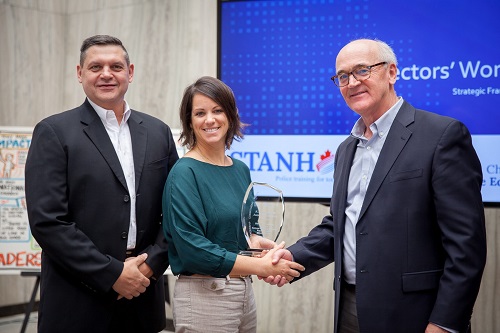
There's a lot changing in the world of police training. Economic pressures, new technologies, and a greater focus on a sector-based competency approach are all drivers behind the need, and the capacity, to improve training efficiencies. During Stanhope 2011, representatives from 42 agencies (including police services or academies from every province and national agencies such as Department of National Defense, National Research Council Canada, Corrections Services Canada, and Fisheries and Oceans Canada) came together to examine the issues, share experiences, and explore innovations for sustainable, effective training models.

The fifth annual Stanhope Conference was the best yet. Though we say that every year, it's no less true. The frankness of the discussions, the level of collaboration, and the diversity of participating organizations have reached new thresholds. And when it comes to making fundamental changes to the way training is done in this country, open, honest discussion and a willingness to collaborate with a broad range of stakeholders is the only way it will happen.

Of course, coping with souring economic conditions was a central theme at Stanhope 2011. The recent fiscal downturn is forcing the hand of many police services to find new and better ways to deliver training. Though the degree of impact varies among organizations, participants at Stanhope 2011 clearly appreciate that enhancing efficiencies, no matter the state of the economy, is always a priority. But recognizing the need and finding the time and resources to actually initiate change are often at odds. Despite the obvious challenge, many organizations are proving that a transition to online and blended learning approaches is making significant improvements to the bottom line.

When it comes down to the numbers, there were many impressive examples of how e-learning is being used to improve organizational efficiencies. Among these, Ottawa Police Service estimated savings of half a million dollars when it introduced an online approach to Suspect Apprehension Pursuits recertification training; the BC Ministry of Public Safety and Solicitor General would never have been able to meet province-wide mandatory training requirements without an online approach.

In terms of technology, there's a keen awareness that police services and other training institutions must become increasingly saavy to engage learners and maximize the advantages of available technology. It's clear that social media, simulation, mobile learning, and enhanced interactivity will all be important aspects of future learning trends in the sector. During the conference, participants got hands-on experience with new technologies such as NRC's Mobile Interative Trainer (MINT) and a first-hand look at the power and versatility of existing tools such as virtual classrooms, desktop simulators, and i-Pad. Each of these technologies will play a role in creating innovative, sustainable learning environments.

Apart from the actual means of delivery, perhaps one of the most significant developments to impact the future training landscape will come through a national compentency-based approach. Over the last three years, the Police Sector Council has carried out extensive consultation with the police community to identify the core competencies associated with all ranks within the sector. Based on this research, it has developed tools like the i-SkillSuite (Police Edition) to help services and officers alike manage human resources and professional development. While a compentency-based approach in the police sector is still in its infancy, it will have an immediate and direct impact on the selection of priority topics for e-learning development at CPKN. Ensuring new courses, particularly around basic constable, leadership, and investigative training, are based on nationally-recognized compentencies will generate benefits across the sector and put PSC's research into an applied working environment.

Over the last five years, there's been a distinct shift in the focus of Stanhope discussions. It's no longer about whether e-learning works - the evidence that it does is overwhelming; it's increasingly about how the sector can work together to leverage its potential. It's about effectively managing change and finding practical ways to share knowledge, resources, and research. At the end of the day, CPKN has a very central role in all of this. Though producing effective, relevant e-learning will continue to be top priority, CPKN is recognized as the natural hub for a broader spectrum of training related activities such as coordinating an approach for new technologies and amassing and cataloguing associated learning research. However long-term success ultimately lies with police services, training academies, and other law enforcement agencies to make an active commitment to work together to advance and implement new approaches to training. And if Stanhope 2011 is any indication, we're well on our way.

- The CPKN Team


Posted: June 2011

The Stanhope Conference is the most important event on CPKN's calendar. For us, it's an opportunity to connect face-to-face with the Canadian police community and spend dedicated time discussing the pertinent issues surrounding online training. Those discussions not only set the course for the year ahead, but also help us focus our energies on addressing the training challenges that have the greatest impact on police services and law enforcment agencies across the country. For delegates, it's a chance to network, report on in-house initiatives, and consult with other organizations on the challenges and solutions to implementing effective online learning programs.

Stanhope 2011 is our fifth annual conference and, for us, is a true milestone. Over the years, Stanhope has been an invaluable means of networking, sharing successes, understanding challenges, and creating collaborative solutions with respect to online training. In recent years, the Canadian police community has made significant strides in the integration of e-learning into training models. But change is constant, particularly in technology-related fields, and e-learning continues to evolve and grow. This year's agenda has been constructed around the theme of Managing the Evolution of e-Learning. Sessions will focus on understanding on what the future of training looks like and how e-learning and blended learning solutions can be used to optimize the learning environment, enhance efficiencies, and create a nationally-relevant approach to core training. As always, Stanhope is a working conference and we look forward to hearing what you have to say!

We look forward to seeing you at Stanhope!


Sandy Sweet
President, CPKN


Conference Co-Sponsor

The Police Sector Council is committed to enabling Canadian police organizations, partners and stakeholders to implement innovative, practical solutions to human resource planning and management challenges. As part of that commitment, PSC has actively funded the development of numerous national e-learning initiatives for the police community as well as networking opportunities like the Stanhope Conference. CPKN gratefully acknowledges PSC's ongoing support in these areas.

Additional Support

CPKN gratefully acknowledges funding support from: